

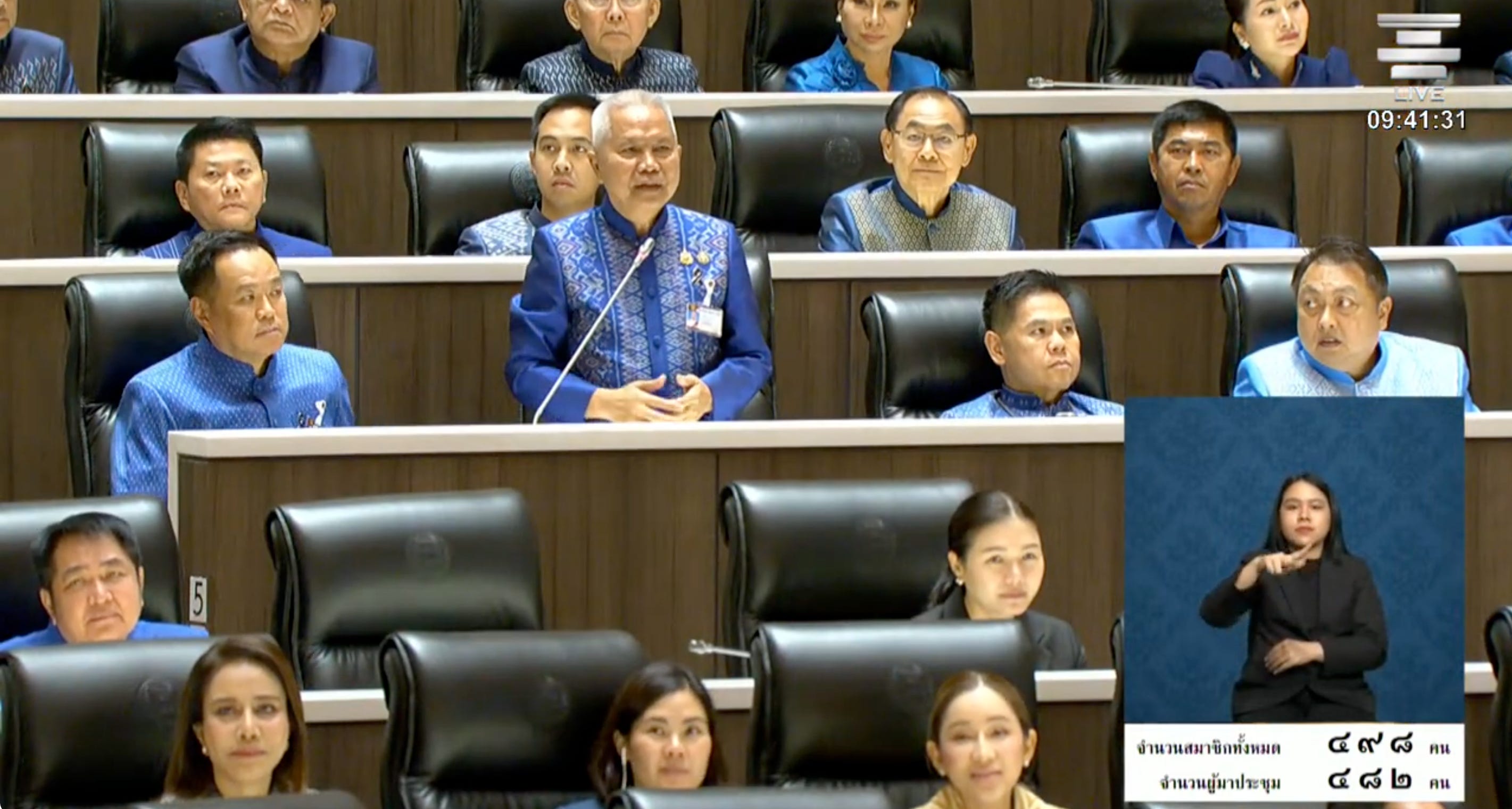
At the new parliament’s first session on March 15, Bhumjaithai’s Sophon Saram was elected by MPs as Speaker of the House of Representatives. Mallika Jirapunvanit from Bhumjaithai was elected as first deputy speaker, while Lertsak Pattanachaikul from Pheu Thai was elected as second deputy speaker.
There were no surprises from the voting tally. Sophon received 289 votes, while the People’s Party nominee Parit Wacharasindhu received 123 votes. The former aligns approximately with the number of MPs in the government coalition, while the PP’s tally matched with its own MPs. There should thus be no surprises in the vote for prime minister.
We did get a preview of how the opposition will function, however. Both the Democrats and Kla Tham announced prior to the vote that they would abstain. The total number of abstentions was 80, which matches with the number of Democrats and Kla Tham MPs added with the interim speaker. This is a clear indication that the two parties are unwilling to follow the PP’s lead and will be seeking to maintain their independence. It also shows that for now there are no MPs from these two parties seeking to signal their willingness to defect and join the coalition, instead obeying their party leadership.1
A former primary school teacher from Buriram province, Sophon is known to be close to Newin Chidchob. Sophon said that as speaker, he wants more laws to originate from the legislature rather than the executive branch. We’ll have to wait and see how he plans to accomplish this.
“Buriram’s Golden Age”
Sophon’s election reflects the overall dynamics of this parliament. He will be the second Bhumjaithai figure to be Speaker — Newin’s father Chai Chidchob served in the post between 2008 to 2011 — but his speakership will take place under radically different circumstances from Chai’s. In 2008, Bhumjaithai had been conceded the post as an important coalition ally. Sophon, on the other hand, is ascending to the top post in Thailand’s legislative branch as a sign of how dominant the party’s position is.
A recent article in The Momentum noted the rising prominence of Buriram province. It is the home base of Bhumjaithai; the party held a three-day retreat for its MPs in Buriram just last week. Sophon, the constituency MP for Buriram’s District 5, will preside over the House of Representatives.2 In the Senate, Buriram senator Mongkol Surasajja wielded enough support to be elected Senate President in 2024. He previously served as Buriram’s provincial governor. (Overall, 14 Buriram candidates were selected as senators in 2024, the most of any province, surpassing far more populous provinces like Bangkok). Thai Post perhaps put it clearly when they called this era the “a true golden age for Buriram.”
In a way, the outsized eminence of the dark blue capital demonstrates the level of hegemony the dark blue camp currently exercises over Thai politics. They enjoy not only a parliamentary majority, but also a friendly Senate that has wide control over appointments to key posts in the judiciary and the independent agencies. To put it simply, we have not seen such a concentration of power in any faction in Thai politics during a democratic period since at least the early 2000s.
It’s also worth noting, however, that this election was conducted by secret ballot, so it’s not a great signaling device any3way.v
For his part, Sophon has dismissed fears that Buriram had too much influence over the legislature, saying that it is the work he does that matters.
It seems that the political Center of Gravity has shifted….from Krungthep Maha Nakhon ( aka: Bangkok ) to Buriram. Of course the real center of power ( the upper tiers of the Power Pahoda ) rest with the Oligarchs, who live wherever they wish to live on any given day; and don’t waste their time dabbling in politics.