

This was quite an eventful week in Thai politics. I’ve wanted to test out a post format where I provide event recaps in especially busy weeks in Thailand, so I figured this is a good week to try. (If you find this format helpful, please let me know in the comments!)
We learned that the People’s Party MPs have for now been spared a parliamentary suspension, and Pheu Thai restructured its executive board. I plan to write about changes in the leadership of these parties in a future post, so I won’t be covering this today. Instead, we’ll be taking a look at discussions on the debt ceiling, the prime minister’s meeting with China’s foreign minister, a move towards cancelling MOU 44 and the distribution of parliamentary committee chairmanships.
Thailand mulls raising debt ceiling
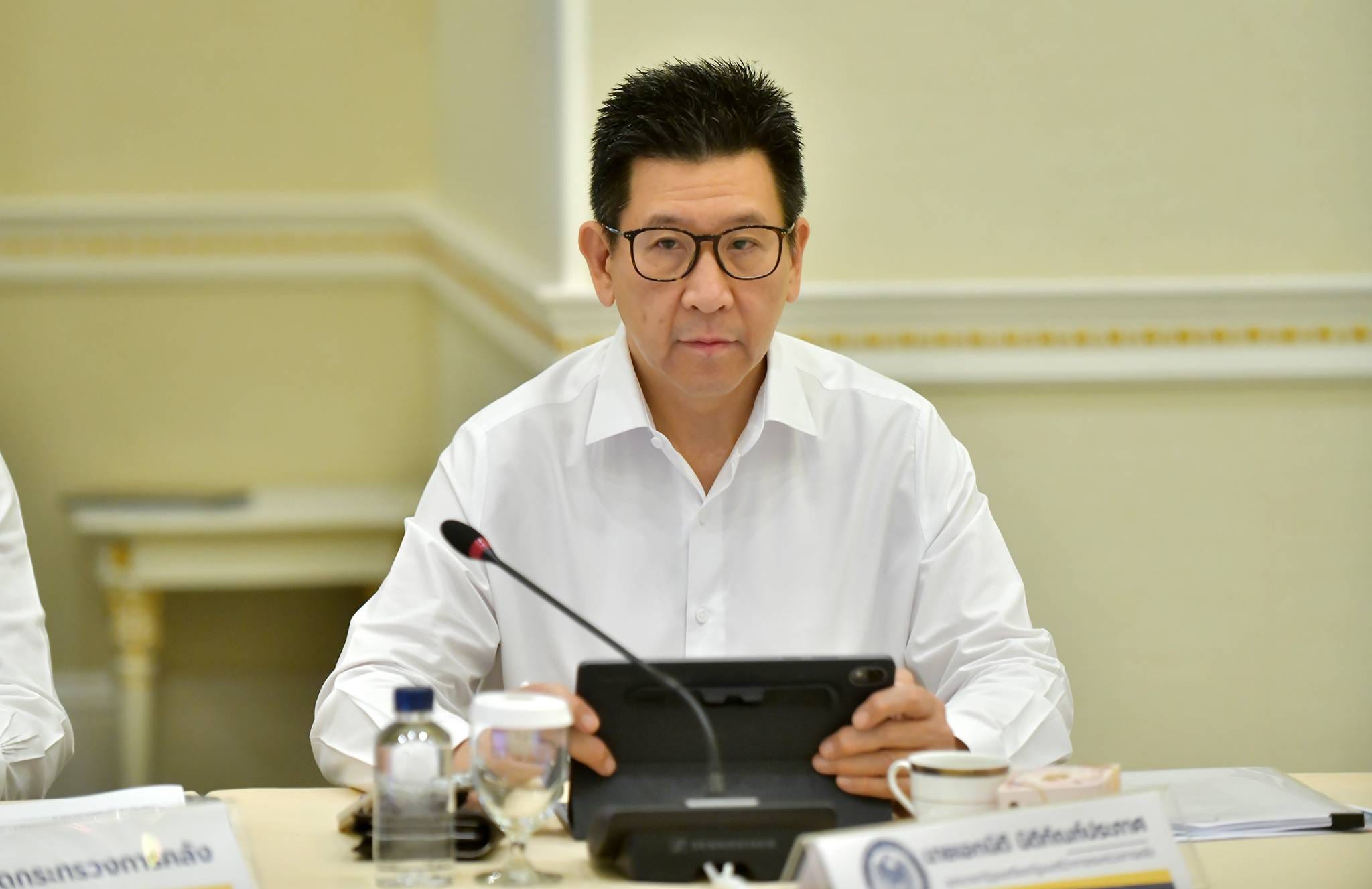
On April 20, Deputy Prime Minister Prakorn Nilprapunt revealed that the government is planning to borrow 500 billion baht. Thailand’s public debt is currently at around 66 percent of GDP, with the debt ceiling standing at 70 percent. When asked by reporters whether he was planning to raise the debt ceiling from 70 to 75 percent, Prime Minister Anutin Charnvirakul nodded. Later, however, Deputy Prime Minister and Finance Minister Ekniti Nitithanpraphas said that there was no need yet to raise the debt ceiling. He also said that a borrowing decree will only be made if there is need, noting that the government must prepare to deal with a long-term global crisis.
Ekniti has also revealed that a new phase of the Khon La Khrueng scheme is coming in June, with the ratio of government assistance and public payment likely to be adjusted from 50:50 to 60:40. It appears that the scheme will also be renamed to Thai Chuay Thai Plus (Thais Help Thais Plus).
Anutin meets Wang Yi
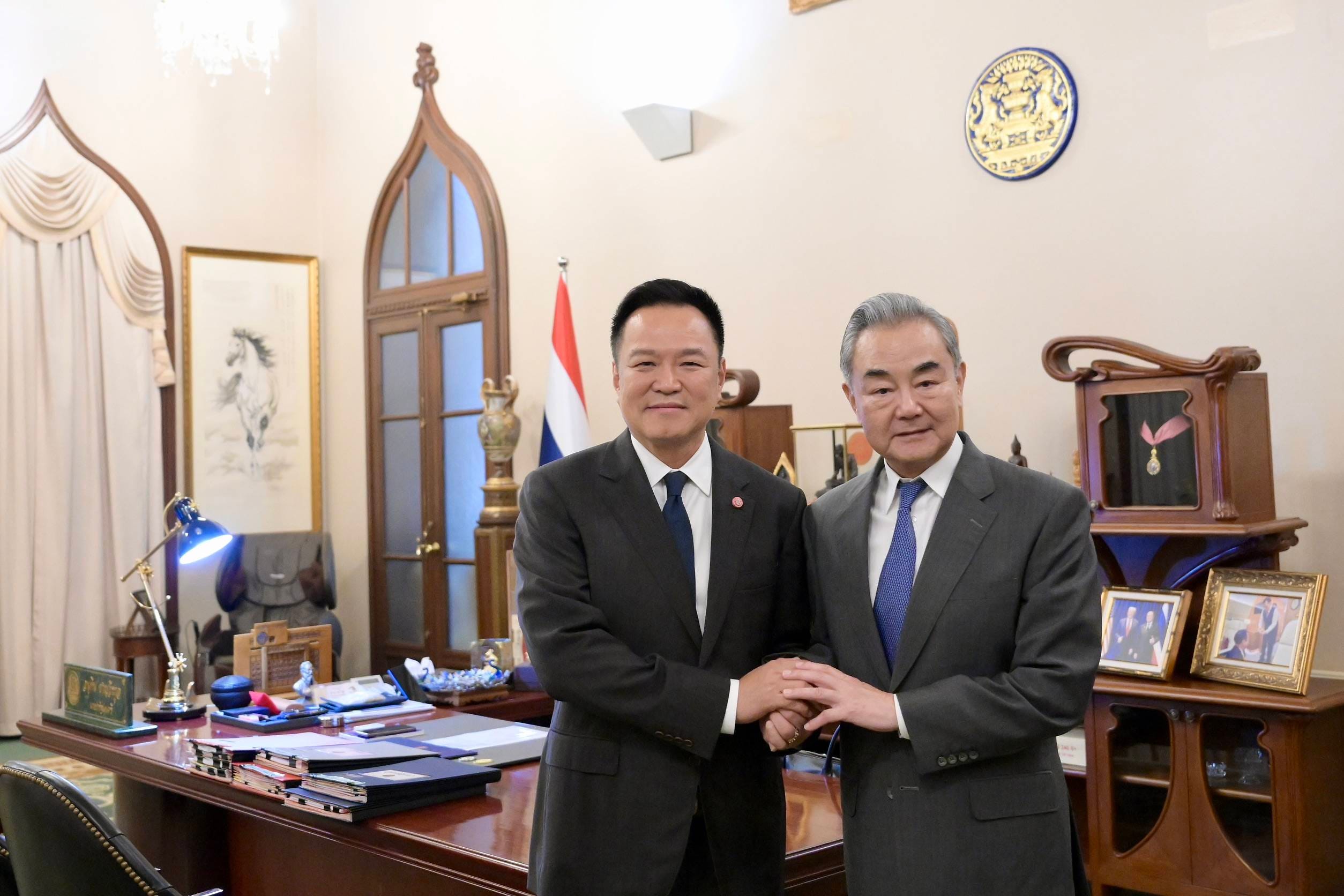
Wang Yi, China’s foreign minister, met with Anutin at Government House on April 24. This is his first visit to Thailand since 2024, when Thailand and China officially signed a visa-exemption agreement. This visit did not yield as big of an announcement, but it appeared to be friendly, with Wang telling Anutin that he “looks very handsome” and Anutin replying that Wang is “more handsome than me.” Anutin also personally drove Wang to lunch in his BYD car.
More substantively, according to Deputy Prime Minister and Foreign Minister Sihasak Phuangketkeow, China said that it will not interfere in the issue of Thai-Cambodian relations. (Before visiting Bangkok, Wang Yi was previously in Cambodia, where he called for scam centers to be “completely eradicated”).
National Security Council moves to cancel MOU 44
On the topic of Cambodia: the National Security Council approved the cancellation of MOU 44, a bilateral agreement between Thailand and Cambodia governing the maritime border in the Gulf of Thailand. (I previously wrote about MOUs 43 and 44 here). This was a major Bhumjaithai campaign pledge, and many coalition partners had also pushed for the revocation of at least one of the MOUs. The Ministry of Foreign Affairs will now have to determine how to move forward. According to the Chief of Staff of the Royal Navy, Thailand and Cambodia can utilize UNCLOS mechanisms moving forward.
Committee chairmanships decided
Parliament has finished allocating chairmanships of parliamentary committees. The quotas were as follows: 14 for Bhumjaithai, 9 for the People’s Party, 5 for Pheu Thai, 4 for Kla Tham, 2 for the Democrat Party and 1 for Thai Ruam Phalang. Thairath English has a full list of the committees distributed here.
NationWeekend reported that there was quite a frenzy from the parties to seize these chairmanships, with many parties fighting over the same committees. The easiest allocations were Pheu Thai’s, which received committees corresponding to their ministries under their control, but Bhumjaithai and the People’s Party expressed interest in many of the same committees. “In the last parliament,” NationWeekend notes, “the orange party received the chairmanship of many committees and used these mechanisms to scrutinize the government until they were able to use this information in no confidence debates and National Anti-Corruption Commission petitions. This time, the coalition parties must seize the chairmanships that correspond with their administrative allocations.”
I think it's a great idea for regular updates. But please continue with deep dives when appropriate!
This format is very helpful. Do you have any two cents on the people's reception so far to the Anutin's government post-election? Is it different compared to his government pre-election?