

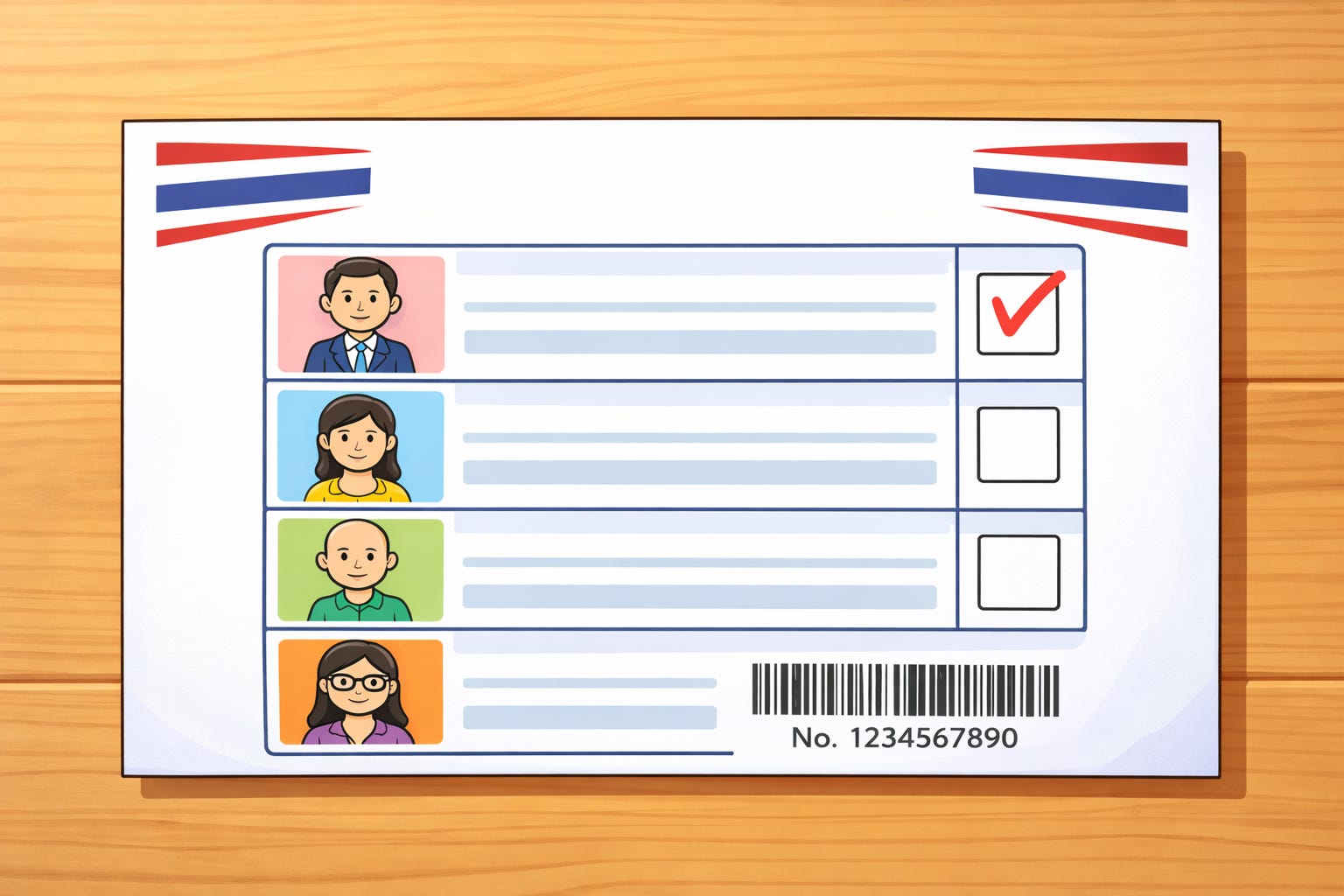
In the past few pieces, I’ve alluded to the ongoing debate regarding the barcodes that were printed on the ballots used in the 2026 general election. I want to take some time in today’s newsletter to take a more in depth look at this controversy and what it could mean for the political landscape.
The barcodes that were printed on the ballots in this election are new and have not been used in previous elections. It has been found that scanning these barcodes reveals a unique and ordered serial number. Critics have seized on this innovation to argue that it could be theoretically possible that someone in possession of the ballot paper, its stub, and a voter list at that specific voting station would thus be able to trace the voter who used that specific ballot, which could compromise thus compromise the secrecy of each voter’s choices. This, they argue, would contravene Section 85 of the 2017 Constitution, which states: “Members of the House of Representatives who are elected on a constituency basis shall be elected by direct suffrage and secret ballot.”
The Electoral Commission argues that these barcodes were used in order to prevent fabricating ballots, counting to ensure that the number of ballots in each roll is correct, and tracking the origin of lost ballots. The three components necessary to trace a voter’s specific choice (the ballot paper, the stub, and the voter list) are needed together, and thus without possession of all of these materials, the principle of the secret ballot is upheld.
This controversy has brought in Thailand’s most famous legal heavyweights. Dr. Wissanu Kruea-ngarm, former deputy prime minister for legal affairs, was the first to weigh in. Wissanu said:
If you ask for my personal opinion, I think that this is wrong. It is not a secret, because if someone wants to, they are able to go back and trace [the voter’s choice]. Is there a possibility of finding out? If so, then it is not a secret. Section 85 of the Constitution states that [voting] must remain a secret. That means secrecy from this world entirely.
The principle of the secret ballot, Wissanu argued, means that the identity of the person who cast that ballot must remain a secret for eternity. Although he emphasized this was merely his personal opinion and that he could be wrong, Wissanu noted that if the Constitutional Court does rule that Section 85 was violated, he sees few options other holding a new election nationwide.
On the other side of this debate is Dr. Bowornsak Uwanno, the current deputy prime minister in charge of legal affairs and another prominent scholar of constitutional law. (See his posts here and here). Bowornsak noted that “some legal gurus have ‘leaped over Lanka’1 and argued that a ‘secret ‘means it must be secret from the entire world.” However, Bowornsak argued that such a secret does not exist in practicality, and the barcodes do not contravene the principle of the secret ballot. He made a couple of key points:
It is the role of the EC to ensure the election is conducted cleanly. In the past, he noted, ballot stuffing has been noted. Barcodes ensure that this cannot happen.
Three of the countries which began the conduct of the secret ballot, namely the United Kingdom, the United States and Australia, also use similar mechanisms. In no country has an election ever been annulled because of the use of barcodes.
A “secret” does not mean that responsible officials cannot access that information. In an election, the responsible officials are the Electoral Commission.
A Constitutional Court ruling from 2018 argued, in a case on having an official assist the disabled and the elderly with marking their ballots: “As long as there is no public dissemination of that disabled or elderly person’s voting choice to the public, then it can be considered a vote conducted directly and secretly.”
The uncertainty over whether the constitution was violated means there are plenty willing to test the waters. The Ombudsman has revealed that 28 cases have already been filed, which may be forwarded to the Constitutional Court for an opinion. The EC has been operating carefully, using ballots with no barcodes in election reruns conducted on Sunday. This led People’s Party leader Natthaphong Rueangpanyawut to ask whether or not this is an admission that the ballots used on February 8th were problematic.
Ultimately, it is likely that this case will be heard in front of the Constitutional Court. Will it lead to an annulled election? I don’t have a firm prediction to make here, although I have a hunch that the Constitutional Court’s precedent from 2018 (cited by Dr. Bowornsak) would indeed provide those who take up the EC’s side of the debate with firm footing to stand on in a legal battle. Meanwhile, the Bhumjaithai government will proceed with politics as usual as it continues to form a government — more on that soon.
On 2 bybl Bowornsak above, those countries don't have the Thai legal system. If I'm not mistaken, it is common for the constitutional court to nullify stuff based on any breach of protocol. This isn't the norm elsewhere.
I'm not talking about politicisation here! Different subject. I think that outside of the politicisation debate, there are different legal habits here Vs the US etc.