


Prime Minister Anutin Charnvirakul has had a busy trip to China, which I wrote about earlier this week. That post came out before a rather melodious end to Anutin’s visit, which has surprisingly overshadowed coverage of his entire trip.
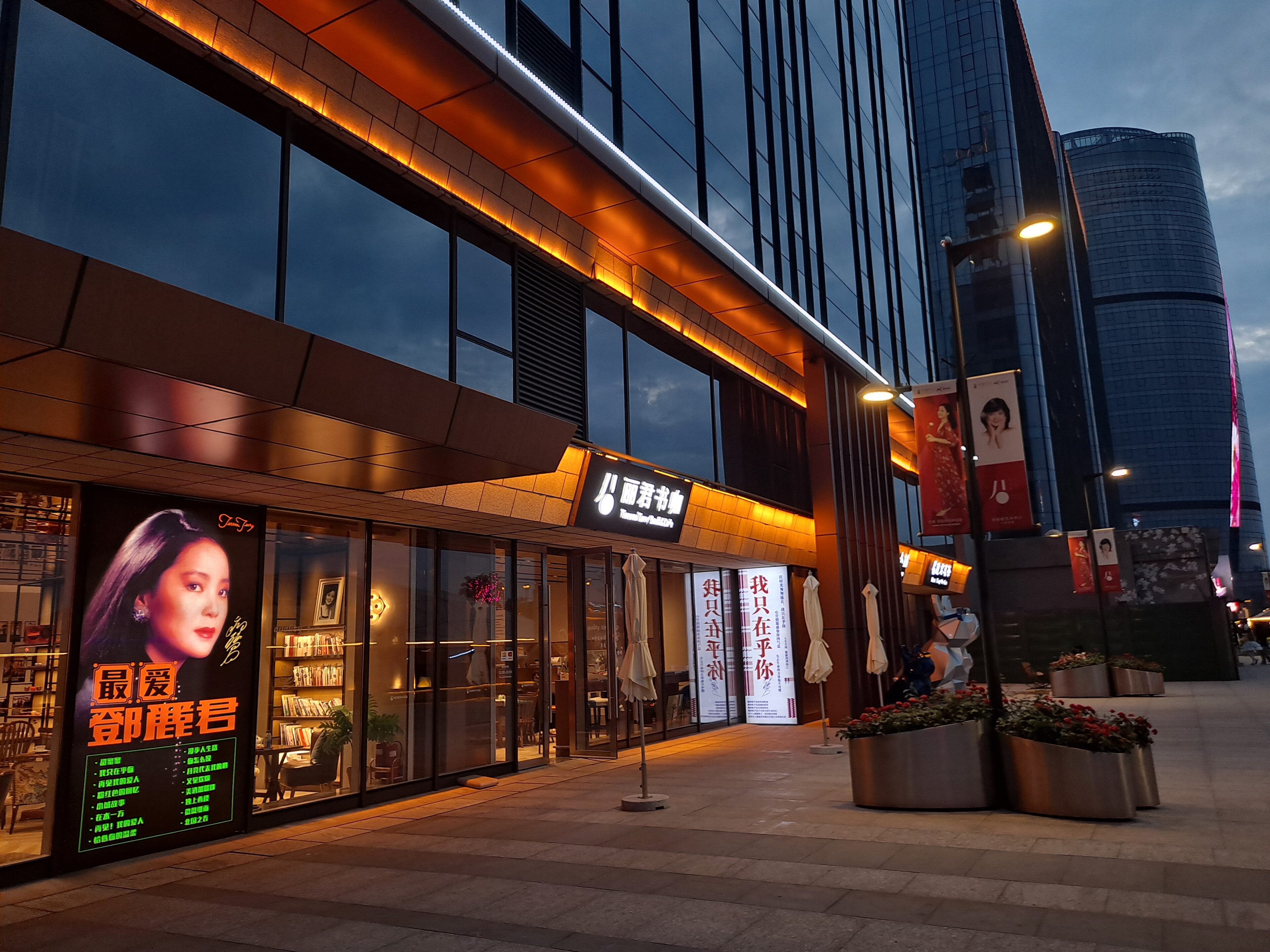
The prime minister has become well known for his musical diplomacy, whether it be playing traditional instruments in Vietnam or playing the saxophone while Malaysian Prime Minister Anwar Ibrahim sings “My Way.” In his latest performance, Anutin serenaded Chinese Premier Li Qiang with the song “Tian Mi Mi” (甜蜜蜜, “Sweet as Honey”). Tian Mi Mi is one of the most famous songs in the Chinese language. Sung by Teresa Teng (Deng Lijun), the lyrics are simple and innocent, comparing a smile to the sweetness of honey and a flower that blooms in spring.
The controversy erupted when Russ Jalichandra, a former vice foreign minister under Paetongtarn Shinawatra who runs the “Alternative Ambassador” Facebook page, commented that Anutin’s choice of singing Tian Mi Mi was inappropriate because it was composed by a Taiwanese singer. “I remember that twenty years ago, a Chinese deputy premier visited Thailand and Thais wanted to please him by playing famous Chinese songs at a banquet. However, they were Taiwanese songs, including Tian Mi Mi. It turned out that after a while, the deputy premier left the room.” Other media channels and netizens pointed out that the song was once banned in China. The 101World Facebook page wrote simply: “Tian Mi Mi, a Taiwanese song originating from Indonesia, once banned by China (but sung by Anutin in China).”
Some critics have taken issue less with the song and more with the act of singing itself. The China expert Kornkit Disathan wrote a lengthy post on the history of Tian Mi Mi, noting that Teresa Teng’s songs were banned in China because it was considered “yellow music” (degenerate songs focused on romance). Kornkit noted, however, that the ban has long been lifted, and massive Teresa Teng-inspired concerts have been held in mainland China over the past few decades. Kornkit withheld judgement on whether or not singing Tian Mi Mi in the presence of Chinese officials would cause political issues, but commented that Chinese diplomatic meetings are usually serious affairs (unlike the more lighthearted tone of ASEAN leaders) and that he felt a sense of “cringe” watching Anutin’s performance.
Teresa Teng was indeed a noted pro-Kuomintang singer who allowed her voice to be used in propaganda broadcasts. In the documentary Island In Between, made in 2024, Taiwan was still broadcasting Tian Mi Mi on its propaganda speakers! But I think that Russ overstates the antipathy that China’s leaders have towards both the song and the singer. It is documented that even Chinese leaders enjoy listening to Teresa Teng. Joseph Torigian wrote about Xi Jinping’s admiration of Teresa Teng in his recent biography of Xi’s father, Xi Zhongxun. “To relax,” Torigina writes, “he listened to the romantic, decidedly nonrevolutionary musician Teresa Teng…[Xi] Jinping listened to Teresa Teng’s “Small Town Story” so often that the recording broke.”
Ultimately, the criticism appears to be overstated. In the video clip, it appears that it was the Chinese side which invited Anutin to perform a rendition of Tian Mi Mi, so it can hardly give offense if Anutin was simply responding to a request by his hosts. (The government confirmed that the prime minister was invited by the Chinese side to sing).
Deputy Prime Minister and Foreign Minister Sihasak Phuangketkeow wants to close a chapter on this controversy, far less sweet than honey as it is. As Khaosod English wrote, he “urged the public not to politicize Prime Minister Anutin Charnvirakul's performance…saying it was simply a popular tune enjoyed by generations.” The Chinese band would not have performed the song if it was sensitive, Sihasak argued; the public should not let this episode of musical diplomacy overshadow Anutin’s successful trip.
The criticism does appear to have touched a nerve with the government, however. Government deputy spokesperson Ratchada Dhanadhirek posted: “This song is a hit song. Wherever it is sung, people there smile, except in the hearts of some people.” Meanwhile, Anutin himself posted King Rama VI’s adaptation of a verse written by William Shakespeare in The Merchant of Venice. The following is the original English verse (note that the translation does not fully match up):
The man that hath no music in himself,
Nor is not moved with concord of sweet sounds,
Is fit for treasons, stratagems and spoils;
The motions of his spirit are dull as night
Sharp words, certainly. Perhaps Anutin should also have reached for Shakespeare’s Much Ado About Nothing.
This episode will blow over in the next few days. But it is perhaps a sign that Anutin’s freewheeling musical diplomacy, up until this point seen as at worst harmless fun and at best a way for the prime minister to improve personal ties with foreign leaders, has come under greater scrutiny. Anutin’s fun-driven personality has helped him come across as more approachable than previous conservative leaders, and it remains to be seen whether that persona will survive contact with criticism.
A welcome change from Ms Shinawatra serenading Hun Sen down the line.
Seems like Thai politicians are falling over themselves as to who can bow the deepest to China? Also why no discussion of how this spectacle compares with the Thai ministers shamelessly debased themselves by performing on camera for China in the refugee return spectacle?