

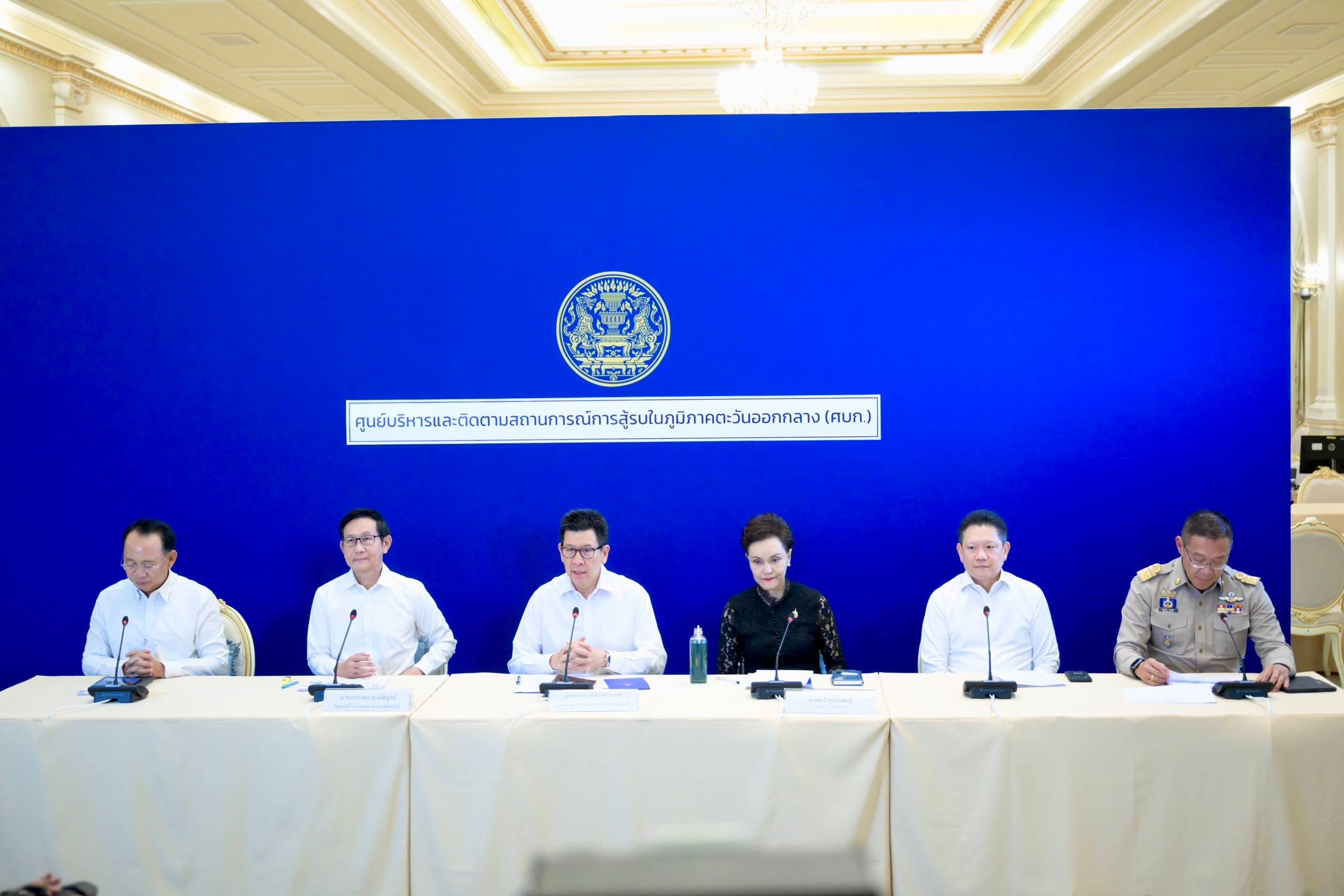
Over the course of his political career, Prime Minister Anutin Charnvirakul has been dealt some bad hands. In 2019, Anutin became health minister. Less than a year later, he was confronted with the worst pandemic in a century. Now, fresh off a massive electoral victory, before he even officially begins his second term as prime minister, he must oversee Thailand’s response to the worst energy crisis in recent memory.
After the closing of the Strait of Hormuz, the Thai government sought to limit the impact of rising energy costs on consumers by significantly subsidizing fuel prices through the Oil Fuel Fund. Within three weeks, it had burned through 20 billion baht, with daily expenditure now reaching around 2 billion baht a day. The government began signaling that the dam on oil prices was about to break earlier in the week, when both Anutin and Finance Minister Ekniti Nitithanpraphas said that oil prices will soon have to reflect the market reality. “Resisting market forces by freezing prices is ineffective. We must tell the truth to the people. Everyone must adapt to the volatility of global markets.” The biggest single-day increase so far came on March 26th, when fuel prices went up by six baht a liter across the board.
The initial subsidies may have been a satisfactory band-aid if the situation in the Middle East had reached a quick resolution. As the crisis dragged on, however, the impact the subsidies had on the market began to backfire. As the economist Nattavudh Powdthavee wrote, in addition to being fiscally unsustainable, the price caps distorted the market in significant ways, leading to hoarding and lack of energy saving. Even as the government stated that Thailand had sufficient fuel reserves, the past few weeks have witnessed frequent shortages at gas stations, forcing the government to require frequent checks of fuel levels.
The energy crisis is, of course, not Anutin’s doing, and any government’s ability to resist the increase in gas prices is limited. Compared to other Southeast Asian countries, Thailand’s fuel prices remain relatively low. Unfortunately for the government, voters don’t operate on a comparative basis. And as we have seen from how incumbents suffered around the world in the wake of inflationary pressure caused by Russia’s invasion of Ukraine in 2022, voters tend not to discern whether or not their government is truly to blame for their hardship. As the New York Times quoted one Thai fisherman saying, “It’s a crisis abroad. But we are the ones who get screwed.”
The optics problem may have been exacerbated due to personnel choices. The activist Srisuwan Janya recently petitioned for Anutin to remove Deputy Prime Minister and Minister of Transport Phiphat Ratchakitprakarn from his position on the task force responding to the energy crisis. Srisuwan argued that because Phiphat’s family members continue to be involved in the energy industry, his appointment violates the constitution. For his part, as the Bangkok Post wrote, Phiphat denies that there is any conflict of interest, “saying he left all management positions in his family's fuel retail business more than two decades ago…He said his appointment reflected his industry experience.”
The People’s Party has demanded that the government raise prices in phases (rather than the 6-baht hike we saw). Deputy leader Veerayooth Kanchoochat also called for differentiated levels of support for different segments of the population. The Democrat Party proposed cutting the diesel excise tax from 6.90 baht to 6 baht per liter and impose a windfall tax on oil refineries, with the proceeds to go to supporting the Oil Fuel Fund. The government has proved receptive to some of these proposals. On March 26th, after a special cabinet meeting, the government announced that it would be looking at reducing the fuel excise tax and increasing payments to state welfare card holders by 100 baht for one month, in order to support low income earners.
There was, however, discontent among opposition parties when no cabinet minister responded to MPs who debated responses to the energy crisis on March 25th in parliament, with Democrat leader Abhisit Vejjajiva reminding the government that the interim cabinet is still constitutionally mandated to be held accountable by parliament. (Anutin was present during the debate but did not speak). The closest we came to a government response was when Bhumjaithai MP Akanat Promphan called on the new energy minister to have courage and to listen more from the people than from government data. The ministry, he said, must not greng jai (fear inconveniencing) anyone. The speech is notable because Akanat, according to various reports, is actually currently tipped to be the next energy minister!
If Akanat does receive this appointment, it will be worth watching how he approaches the energy crisis. When he was industry minister under the Pheu Thai government, Akanat was known for his aggressive approach to cracking down on illegal factories (to the point where he later claimed that gray businesses had put a 300-million baht bounty on his removal). Will he implement a similar take-no-prisoners approach to the energy industry? That remains to be seen.
What disturbs me most (apart from the dreadful difficulties created for small business users of fuel -- particularly diesel) is that this whole problem is regarded by the media as a price / political issue. I follow the Thai news as much as I am able (in English) and not once have I seen Anutin or anyone else assure the Thai people that there are technocrats (government or private industry) working 24 hours a day on finding other purchasing options for oil and LNG. It seems they are just waiting for things to get better and go back to normal. Scary, and frightening in a month or two unless alternative deals are sought out and done