

Hi everyone. My apologies that it’s been a while since my last post — it’s been a very busy time for me. Unfortunately, it looks like this is how things will be for at least the next few months — so I’ll have to be a little selective in what I choose to cover on here!
Today I wanted to focus on an issue that has been flying a little under the radar in the English-language press: the Anutin Charnvirakul government’s plans to reduce the size of the Thai bureaucracy.
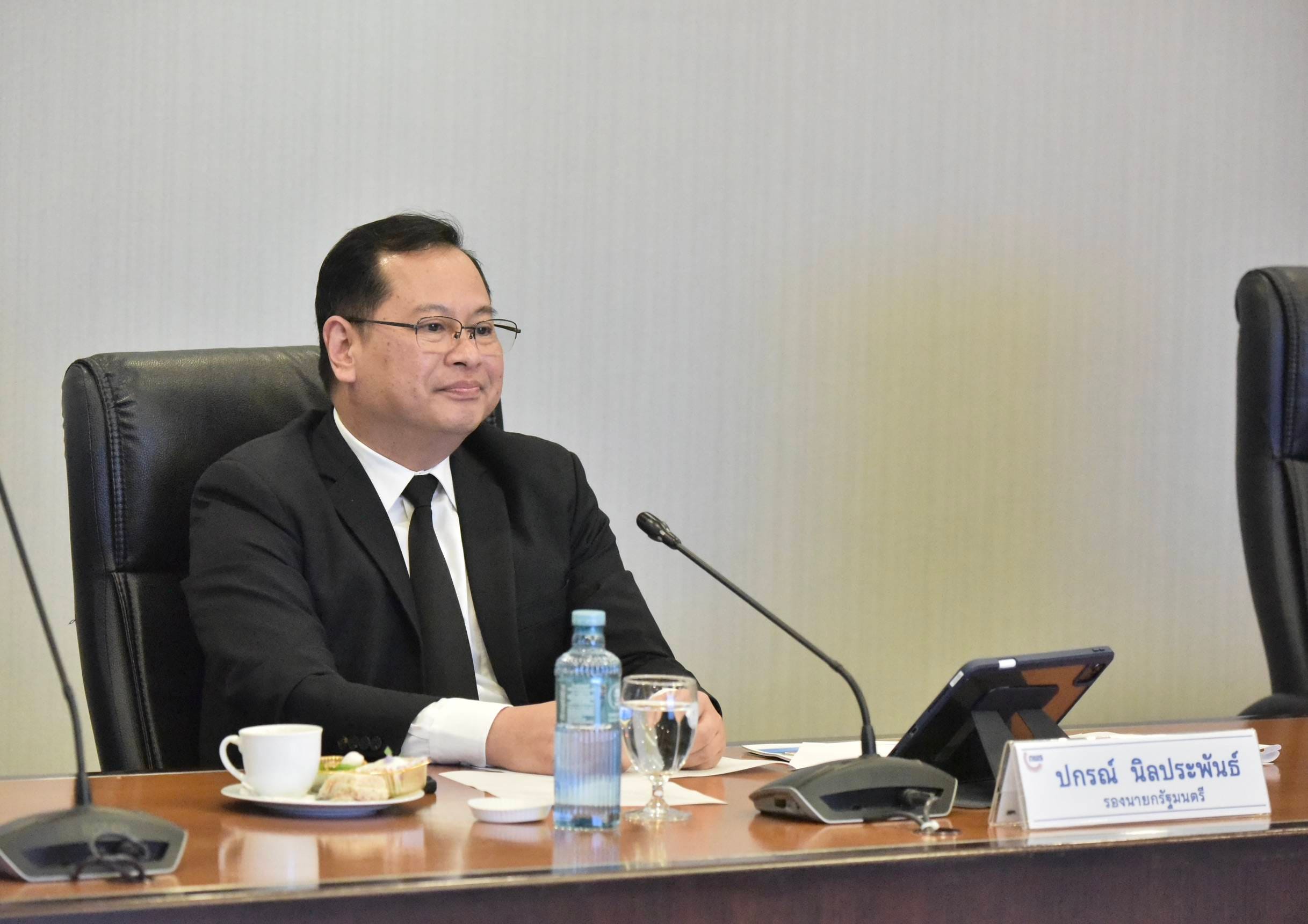
Of course, Bhumjaithai is a conservative party but not in the conventional Western sense — they’ve never really been advocates of small government (although, curiously, their 2019 election slogan was “Reduce State Power and Increase Peoples’ Power). So where is this impetus for making government smaller come from? Back in July, we discussed how many MPs noted that the state budget is largely consumed by routine spending and there is little money left over for government investment. The government is thus pushing a new bureaucratic reform initiative, spearheaded by Deputy Prime Minister Pakorn Nilprapunt, that will seek to reduce state expenditure on the bureaucracy.
Firstly, by 2032, the Thai government hopes to reduce the number of bureaucrats by 15 percent. (According to October 2025 data, there are approximately 3 million state employees in Thailand, composed of 1.7 million bureaucrats and 1.2 million other workers). The cabinet began by approving a plan to reduce state employees by abolishing several already-vacant civil servant positions and abolishing support positions that do not require a bureaucratic appointment.In the long term, Pakorn says that one important first step will be to push for voluntary early retirement, with the hope that these bureaucrats will then enter business “which will be good for the economy.” In the long term, the government hopes to take a look at the benefit system itself.
Secondly, as Money and Banking summarizes here, Pakorn is also seeking “to restructure public sector agencies by reducing the number of central and regional agencies by 10% by 2027, from the current 1,657 central agencies, 2,193 regional agencies, and 7,817 regional agencies.” According to The Nation, each ministry has three months to justify the continued operation of their provincial field offices, with Pakorn saying that bureaucrats whose positions are eliminated by restructuring may either seek to be transferred to central offices or take early retirement.1
These are significant steps that signal that the government is serious about reducing government expenditure. How likely is it for Pakorn’s schemes to succeed?
For one, there is disagreement about the policy specifics. Some experts such as TDRI’s Dr. Nonarit Bisonyabut are also pointing out that a sufficiently attractive early retirement scheme for employees needs to be well-designed or it may not actually result in worthwhile savings for the government, and that capable employees are more likely to accept early retirement for opportunities elsewhere, which means the Thai state could risk losing its best talent.
In addition, downsizing the bureaucracy will be a multi-year effort that requires sustained political attention and courage. Right now it looks like Pakorn has the full backing of the cabinet. However, the bureaucracy can be formidable player in their own right. One wonders whether making an enemy of entrenched bureaucratic actors will be adding to the headaches that the Bhumjaithai government is already facing, and if in the end a senior political figure in the government decides that Bhumjaithai cannot afford to bite more than it can chew. It’s worth noting that state employees are a sizable voting bloc, and while they obviously do not vote uniformly, no government wants to eliminate millions of potential supporters.
So the bottom line is: we’ll have to see whether Bhumjaithai has the political will to see this through. But unless the government can suddenly come up with new ideas on significantly increasing government revenue (quite unlikely), Thailand may not have many options if it seeks a sustainable future for the country’s finances. As Pakorn himself said, “If we don’t do this now, future generations will be in trouble. We must acknowledge reality.”
A side note: This is happening at the same time as another bureaucratic reform initiative: the cabinet has approved creating a “Ministry of Culture and Tourism” and a separate “Ministry of Sports”. (Currently, Thailand has a Ministry of Culture and a Ministry of Tourism and Sports). However, this change will not result in any personnel or budgetary increases.
Yes, I’ve written about the Thai government downsizing with a reduction in civil servants, voluntary redundancy, etc., etc. https://substack.com/@tomtuohy/p-208931779
I’m curious as to where you believe the Thai government is headed over say, the next 5 to 10 years?
Do you think we will be left with much less human forms of government and heading much more towards digital government or decentralized government? I mean in the same way that we have DLT or Decentralised Ledger Technology running Thai banks? Some people are even calling it “rule by algorithm”. What’s your take on all this?