

It has been a busy first year for The Coffee Parliament, which I launched at the end of January. Over the course of this year, I’ve written 84 posts, covering everything from local elections at the start of the year to the collapse of the Pheu Thai government to the beginning of the 2026 general election campaign. I’m deeply grateful for everyone who has read and subscribed to this newsletter this year.
This will be the final update from The Coffee Parliament in 2025. We’ll be back soon to cover what is sure to be an intense election season. Happy holidays to all and see you again after the new year!
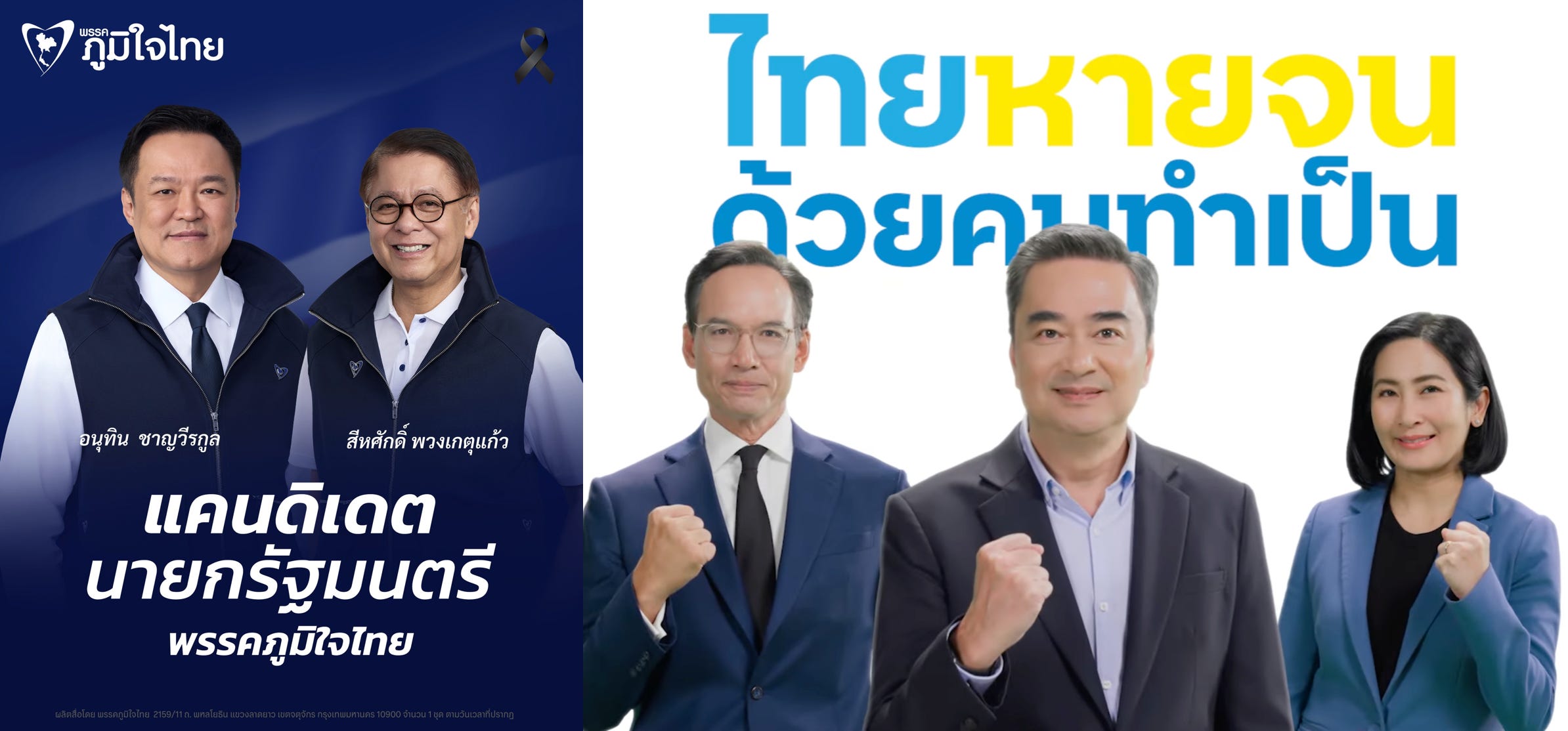
After the People’s Party and Pheu Thai unveiled their STEM-heavy candidates for prime minister earlier, we have now seen Bhumjaithai and the Democrat Party release their slates of candidates. Both parties nominated a prime minister — one incumbent and one from the past. And both took the chance to emphasize the technocrats that they have attracted to the party.
There was a long suspense about who Bhumjaithai would be nominating, aside from Prime Minister Anutin Charnvirakul. It appears that Anutin had announced the candidacies of Finance Minister Ekniti Nitithanprapas and Commerce Minister Supajee Suthumpun prematurely, because in the end both appear to have declined to run. At their first party rally, Bhumjaithai appeared to signal that Anutin would be the sole candidate, but later in the evening the party announced that Foreign Minister Sihasak Phuangketkeow would be joining the party’s slate. We do not know what changed — or indeed if Sihasak himself had blessed this decision. When pressed on when Sihasak agreed to run for PM, Anutin first evaded the question before finally saying that “sometimes people at this level can talk at each other through jñāna” (essentially a Buddhist form of telepathy).
Regardless of how the decision was made, the elevation of Sihasak actually perhaps makes even more sense for Bhumjaithai than Ekniti and Supajee. Anutin’s major appeal to conservative voters who previously voted for former prime minister Prayut Chan-o-cha has been his stances on national security and his conduct during the conflict with Cambodia. Sihasak, a longtime diplomat who formerly served as permanent secretary of the Ministry of Foreign Affairs, is a credible substitute on the diplomatic front and has become popular amongst precisely the voter base that Anutin is courting. The prime minister says that if something happens to him, the party trusts that Sihasak can easily take over.
At the same time, Anutin also confirmed that Sihasak, Supajee, and Ekniti will all take up posts as deputy prime ministers if he is elected to a full term. The bargain that Bhumjaithai appears to be proposing is this: vote for Bhumjaithai, and you will get these three respected technocrats in prominent leadership positions, even if you may also have to tolerate the presence of other “traditional politicians.” Whether or not Bhumjaithai will be able to fulfill this promise remains to be seen, of course. The second Prayut administration also appointed a variety of technocrats, only for them to be forced out when the pressure from other political factions for cabinet seats became unendurable. Can Anutin avoid this same trap?
The Democrat Party, on the other hand, announced that former prime minister Abhisit Vejjajiva, former finance minister Korn Chatikavanij, and digital economy expert Karndee Leopairote will be their PM candidates. The party is billing the three as leaders with different areas of expertise — Korn as the finance minister who oversaw Thailand’s economic recovery after the Global Financial Crisis and Karndee with a host of experience in the digital economy realm — who will all contribute to the mission of bringing the country out of poverty. Abhisit has emphasized that the three have all collaborated together in the past and that they can thus work together seamlessly.
The Democrats and Bhumjaithai are competing for many of the same voters who were Democrat voters in years past. The former must be hoping that nominating experienced figures as PM candidates will give these voters pause before they cast a vote for Bhumjaithai. (The party is indeed very confident in the résumés of their candidates, releasing profiles that go all the way back to primary school!) But Abhisit and Korn have also been the face of the party for a long time (Abhisit first became party leader in 2005) and are now contesting their fourth election as senior party members. The inclusion of Karndee, a fresh if relatively lesser-known face in the party, appears to be an attempt to create a new front bench to expand the party’s appeal.
The goals of the two parties in this election, of course, are very different. Bhumjaithai is angling to win the election outright (something I argue is much more plausible than what many might think), while the Democrats would be satisfied with a modest recovery after years of decline. Bhumjaithai is attempting to win over the conservative base to supplement its mastery of the baan yai strategy, while the Democrats are attempting to woo back at least some of its former voters with familiar faces. If the most basic purpose of the PM slates is to do no harm to these goals, both Bhumjaithai and the Democrats appear to have accomplished this objective.
Election Briefing (Week of Dec 26)
Drawing the political lines
I wrote a summary of the first debate between the PM candidates here.

During the debate, Democrat leader Abhisit Vejjajiva stated that he would not join a coalition that includes the Kla Tham Party. The Democrats reinforced Abhisit’s declaration by making it an official party resolution. Captain Thammanat Promphao has angrily responded with a litany of attacks on Abhisit. The Democrat deputy leader Sathit Wongnongtoey was asked why the Democrats singled out only the Kla Tham Party, and he said that people should “keep watching,” promising there are more episodes in this “series.”
Following the debate, the People’s Party leader Natthaphong Rueangpanyawut said that the party would also not join a coalition with Kla Tham. He also said that his party’s MPs will never vote for Anutin as prime minister again. Similarly, Anutin announced that unless the PP ends what he called its “obsession” with amending Section 112 (the lese majeste law), he would also not consider any coalition agreement with the PP. In response, Natthaphong cast this election as a choice between an Anutin government or a PP government.
We’ll have a lot to unpack here in the coming weeks about what these lines in the sand mean in terms of possible coalition configurations.
Other PM candidates
This week saw the steady unveiling of PM candidates from various parties:
Kla Tham announced that Captain Thammanat Promphao, who is currently deputy prime minister and minister of agriculture, will be the party’s sole PM candidate.
United Thai Nation announced that former deputy prime minister and minister of energy Pirapan Salirathavibhaga will be their main candidate for PM. Atavit Suwanpakdee and Naraphat Kaewthong, both former MPs, will be their second and third candidates.
Thai Sang Thai announced party leader Sudarat Keyuraphan, former National Security Council secretary-general Paradorn Pattanathabutr, and business executive Suradej Thawesaengskulthai as candidates.
Thai Kao Mai announced their party leader Suchatvee Suwansawat and party chairwoman Kalaya Sophonpanich as candidates.
I will be releasing a General Election Guide soon that includes a list of each parties’ PM candidates, their profiles and the policies that they are proposing.
Palang Pracharath wobbles
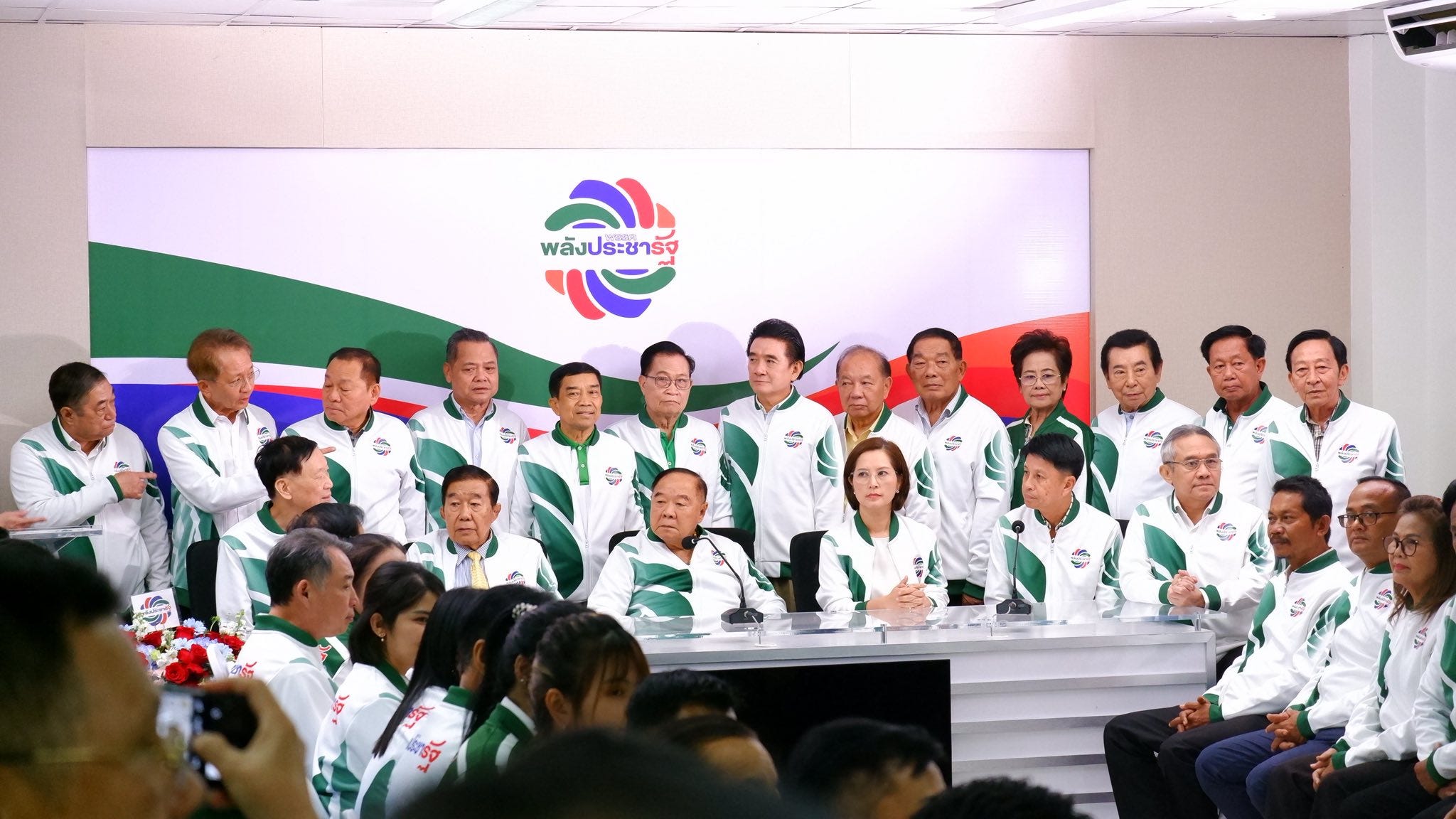
General Prawit Wongsuwan’s Palang Pracharath Party appears to be disintegrating. Prawit, who is aged 80, decided to withdraw from being a candidate for prime minister at this election, citing ill health. Following this announcement, former finance minister Thirachai Phuvanatnaranubala (who represented the party in the Thai Rath debate) also withdrew his candidacy for prime minister. This leaves the Minister of Labour Trinuch Thienthong as the party’s sole candidate.
The PPRP had originally been founded to keep then-prime minister Prayut Chan-o-cha in office after the return to democracy in 2019. Midway through Prayut’s term, however, internal party rivalries sidelined the technocratic faction aligned with former deputy prime minister Somkid Jatusripitak, allowing Prawit to take full control of the party. Since then, the party has found it increasingly difficult to maintain its relevance on the political stage. It was reduced to 40 seats in 2023, and half the party’s MPs defected to the Kla Tham Party in 2024. Although the PPRP attempted to position themselves as a “modern conservative” party, its polling showed that voters have largely deserted the party. Trinuch says that the party still intends to contest this election, but it is difficult to see what the PPRP’s strategy is moving forward.
Ken, just to say thank you for your insightful and informative contributions throughout the year.
May yourself and your family enjoy a thoroughly deserved New Year break.
สวัสดีปีใหม่
As you often say, Ken, a month is a long time in Thai politics (very true!). But, if Anutin produces an effective ceasefire with Cambodia over the next few weeks,with terms which electors approve of, I might take a bet on Bhumjaithai achieving 180 seats. I have no analytical support for this, just a gut feeling.