

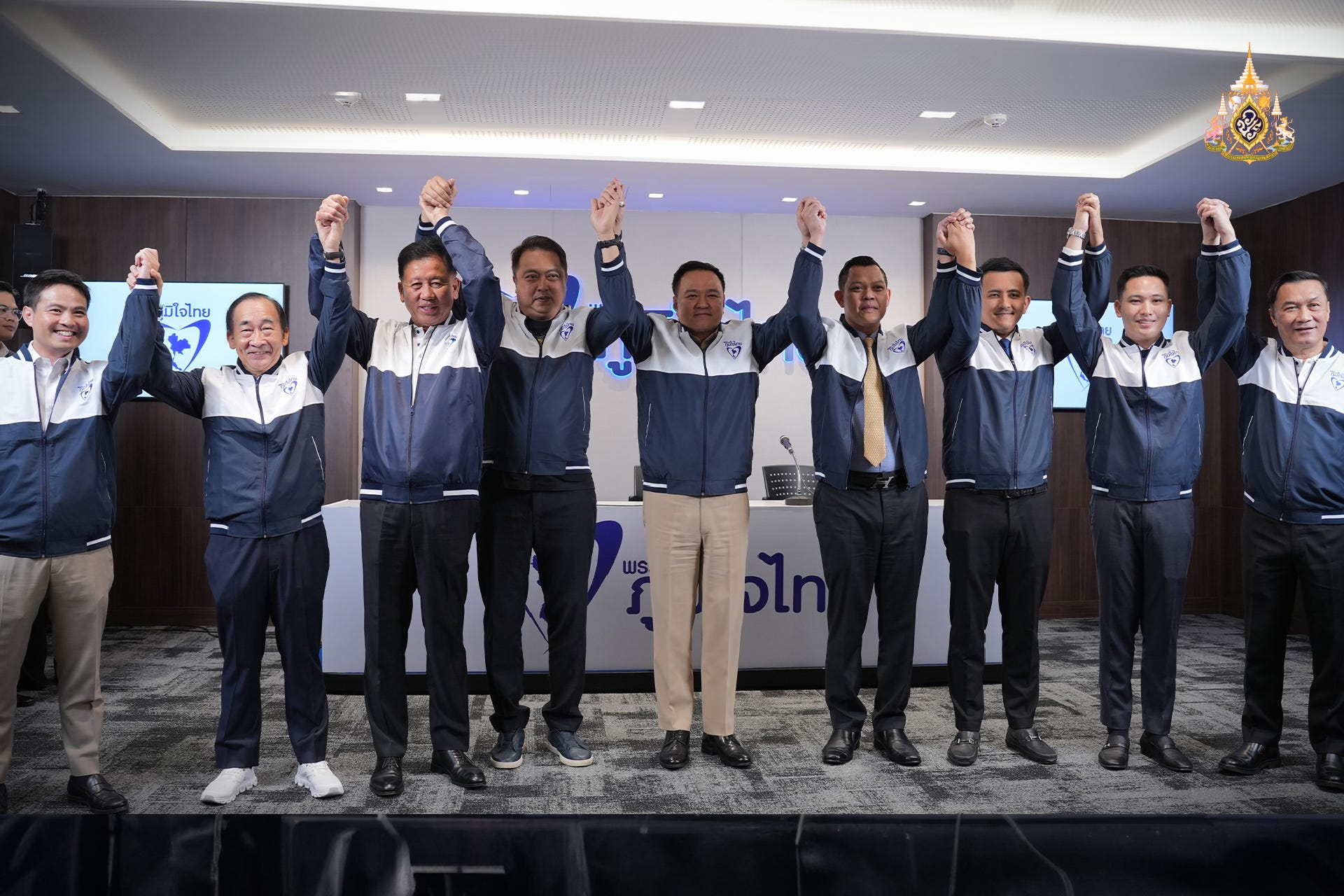
While it’s far too early to make a forecast of how each party will fare on the February 8th election, signs point to Bhumjaithai being the early frontrunner.
Of course, if someone were tracking just the polling, they would think that Bhumjaithai is on track to come in a rather distant second or third place. But Thai elections are never just about the national sentiment. Voters often split their constituency and party list ballots. And so in this post, I want to do a deeper dive into the reason why Bhumjaithai is currently expected to do very well: its deployment of local clans, known in Thai as the baan yai (literally “the big houses”).1 (See here for a primer on what the baan yai are).
The key thing to note is that in a two-ballot system, the baan yai are more likely to survive regardless of party affiliation. As Napon Jatusripitak and I noted in our 2023 piece:
The two-ballot system provides voters with greater flexibility and choice in expressing their preferences, for example, enabling them to choose a candidate from one party based on local considerations, such as the candidate’s track record, or personal ties to their constituency, while simultaneously voting for another party on the party-list ballot that aligns with their broader ideological or policy preferences.
“Vacuuming to the Brim”
According to a NationWeekend analysis, over 65 former MPs have already switched allegiances to Bhumjaithai over the past few weeks. I’ve reproduced the list here:
Ex-Chart Thai Pattana faction (10 MPs) from Suphanburi and Nakhon Pathom, led by party leader Varawut Silpa-archa (see more here)
From Pheu Thai
Sakda Vichiansin faction (6 MPs)
Other baan yai from the Northeast and Central regions (6 MPs)
From Palang Pracharath
Santi Promphat faction (5 MPs), mostly from Phetchabun province
Santi Piyatat faction (6 MPs), from both the South and the Northeast
From United Thai Nation
Suchart Chomklin faction (14 MPs) from the Eastern provinces
Akanat Promphan faction (11 MPs), mostly from Chumphon and Surat Thani
From the Democrat Party
Niphon Bunyamanee faction (2 MPs) from Songkhla and Nakhon Sri Thammarat
One MP from Mae Hong Son
MPs who have long parted ways with Thai Sang Thai (6 MPs)
“Bhumjaithai’s phenomenon of ‘vacuuming to the brim’ is similar to Palang Pracharath in 2019,” NationWeekend writes, except that Bhumjaithai are “electoral professionals who have laid out a map of the battlefield and clearly targeted key areas.”
This list seems to be incomplete, because some MPs appear to be missing.2 This list also doesn’t appear to include baan yai that have joined Bhumjaithai without having any incumbents. For example, members of the Rattanaseth clan will be contesting the election with Bhumjaithai after failing to win any seats in Nakhon Ratchasima in 2023 with the Palang Pracharath Party. In any case, the overall picture is unmistakable: Bhumjaithai has built a very formidable baan yai-fueled party to contest the 2026 election. The bottom line is that there are at least 130+ constituencies which Bhumjaithai has good reason to believe that they will be competitive in.
Why Bhumjaithai Currently Has the Edge
Of course, it is unlikely that all of Bhumjaithai’s 68 incumbents and all of the party-switching incumbents will win. Forecasting Bhumjaithai’s final constituency seats is not a matter of simply adding up a tally of incumbent MPs. The baan yai are not completely invulnerable to shifts in the national sentiment and they can be unexpectedly swung out of office. In the worst case scenario for Bhumjaithai, the structural advantages associated with having the baan yai could be partially negated if the national sentiment really turns sour against the party. Move Forward surprised in 2023 in large part because it won a lot of constituencies where that was not expected. A lot would have to change for the People’s Party to surprise at that level, however. (I plan to write in a future post about the persistently high number of undecideds and how that could change the trajectory of the race).
In a best case scenario for Bhumjaithai, they would win most of these 130+ constituency seats. There may also be seats which in which Bhumjaithai had not been competitive in the past that may now be possible for them to take, such as in Bangkok, where NIDA polling has them in second place. In addition, if Bhumjaithai wins anything close to the ten percent of the party list vote that they are currently on track to win, you could probably add about ten party list seats to their tally. That could very well happen: the benefits of incumbency, the party’s technocratic reinvention and the nationalist political environment has given Bhumjaithai a big boost. Indeed, the prevailing political winds actually boost the chances that Bhumjaithai’s baan yai will be able to stand their ground.
Compare this to where the other parties currently stand. Pheu Thai has actually limited its baan yai losses and gained a few useful boosts (additions to its strength in Kamphaeng Phet and Nakhon Ratchasima come to mind), but as I noted here, its polling has cratered from historical levels and that makes it doubtful that won’t translate to substantial seat losses. The People’s Party is also polling at the worst it has since Move Forward won the election, and they are a very krasae-dependent party.
So if the trend lines do not change, Bhumjaithai could very well indeed be on track to become the largest party in parliament. Chulalongkorn political science professor Stithorn Thananithichot has already predicted that 150 seats could be in reach for Bhumjaithai. Even if they miss out on being the largest party, getting over a hundred seats and besting at least Pheu Thai could put them in a good position to lead the formation of a government.
I still hesitate to put out any specific numbers this early in the campaign, because a lot can still change. A month and a half is a long time in Thai politics! (Remember how Pheu Thai was supposed to win a landslide in 2023?) There are still plenty of opportunities for Bhumjaithai to shoot themselves in the foot, or for some black swan event that upends the race. But combining their mastery of the baan yai strategy with the national polling, Bhumjaithai is certainly the early frontrunner.
Hey, thanks for the post, very interesting. Do you have an opinion on why we aren’t seeing this edge reflected in the polls? I’ve seen different seat forecasts that put BJT at 150+ seats (over 30% of the available seats), while party-prefered polls have them at a maximum of ~22%, even in the FPTP ballot. That would imply a huge overperformance. Can you think of any previous election where Baan Yai flew under the radar and wasn’t captured by the polls?