

The results for the Bangkok local elections are in…
Chadchart Sittipunt wins a landslide victory in the governor’s race
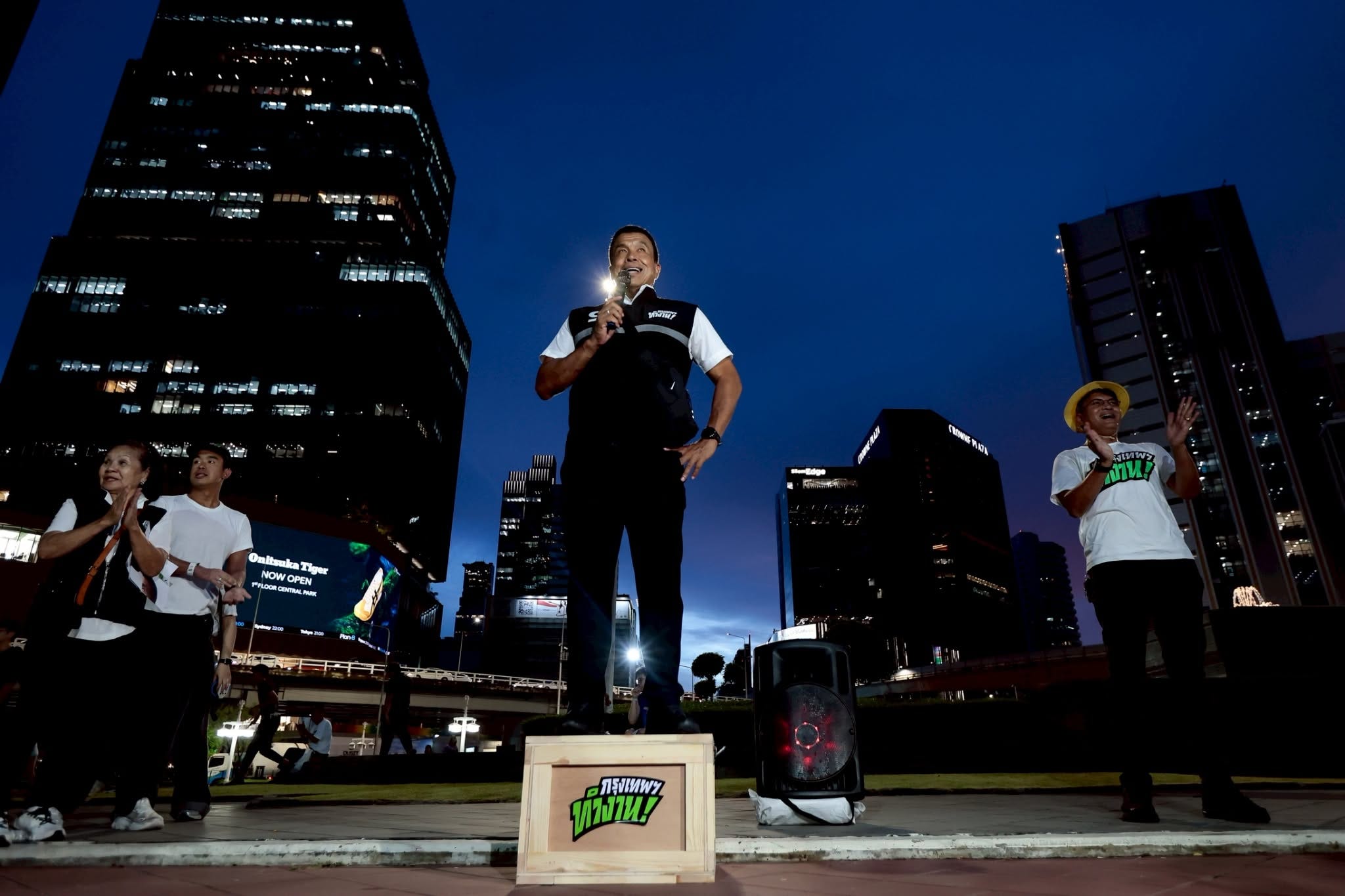
This was one of the most predictable elections in recent Thai history. As we discussed previously in this newsletter, the incumbent governor Chadchart Sittipunt was virtually a lock to win re-election. He did so with ease. Defying a late push from his opponents to investigate internal practices within his administration, Chadchart won around 1.4 million votes (roughly 65 percent of the vote) at the time of writing with 95 percent of the vote counted. He beat his 2022 result both in terms of the vote share and in the raw vote count. It is an enormous personal mandate.
Why did Chadchart win in such a landslide? Satisfaction with his tenure so far, for one. Buy-in for his non-partisan image, as the governor successfully shed his previous Pheu Thai affiliation. Chadchart’s bet that a bigger focus on the “capillaries” of the capital rather than large megaprojects, especially paying attention to daily complaints filed by residents in the Traffy Fondue platform, has also paid off.
The scale of his victory also has much to due with the fact that he faced a field of candidates with relatively low name recognition. One suspects that even had he not campaigned, he would probably still have won almost by default. Yet this still the sort of victory which will raise chatter about whether a return to national politics will be on the cards for someone who appears to be one of the country’s most popular politicians. (Already, at his victory speech, Chadchart was forced to deny questions from reporters about whether his future ambitions would include the office of prime minister).1
No other candidate won more than 15 percent of the vote. Conservative independent candidate Mallika Boonmeetrakool Mahasook came in second place with 13 percent, narrowly besting Chaiwat Sathawornwichit from the People’s Party (who won only 8 percent). The Democrat candidate, Anucha Burapachaisri, was in fourth place with less than 5 percent of the vote. In a way, all of these candidates underperformed. There are enough combined Bhumjaithai and Democrat voters in Bangkok that both Mallika and Anucha should have theoretically performed a lot more strongly.2 Chadchart was able to build a diverse coalition of voters, and perhaps the enormous polling lead he opened discouraged anti-Chadchart voters from even turning out. (Turnout dipped dramatically from 60 percent in 2022 to only 49 percent this year).
There was no bigger underperformer than Chaiwat, however. The PP had just swept Bangkok in a landslide during the general election in February; for Chaiwat to come in a distant third place will be seen as an enormously disappointing result. Part of that comes down to Chadchart’s popularity and Chaiwat’s low name recognition, but the party leadership will be unable to escape taking responsibility: it is simply too dramatic a swing from the general election just a few months ago when they had won 1.4 million votes in Bangkok. The party made too many unforced errors, including a controversial appointment that alienated the party base. The PP’s base has become noticeably less enthusiastic about the party since the dissolution of the Move Forward Party; the election results underline this trend.
People’s Party emerges as largest group in the Bangkok Metropolitan Council, but fails to win a majority
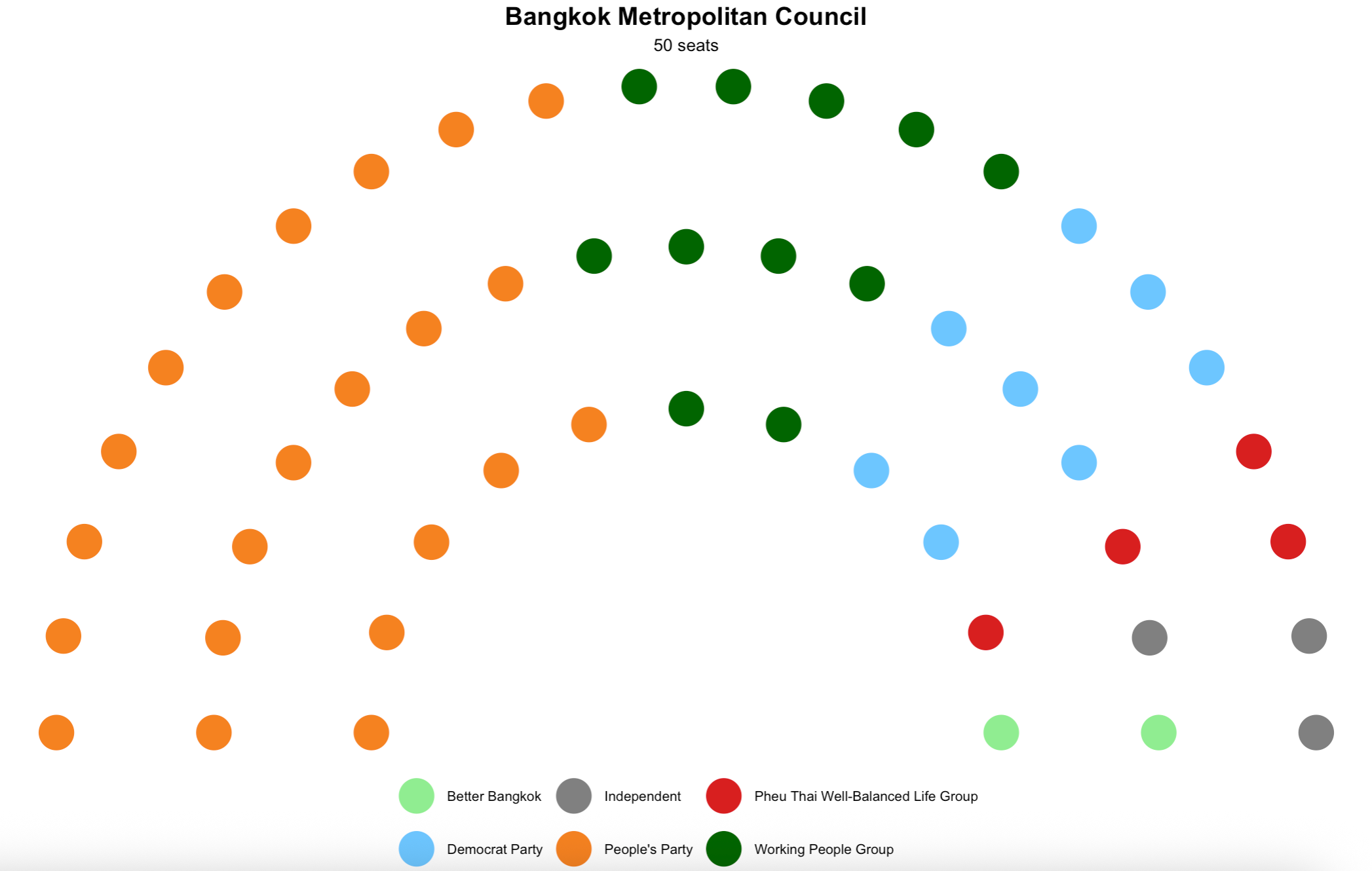
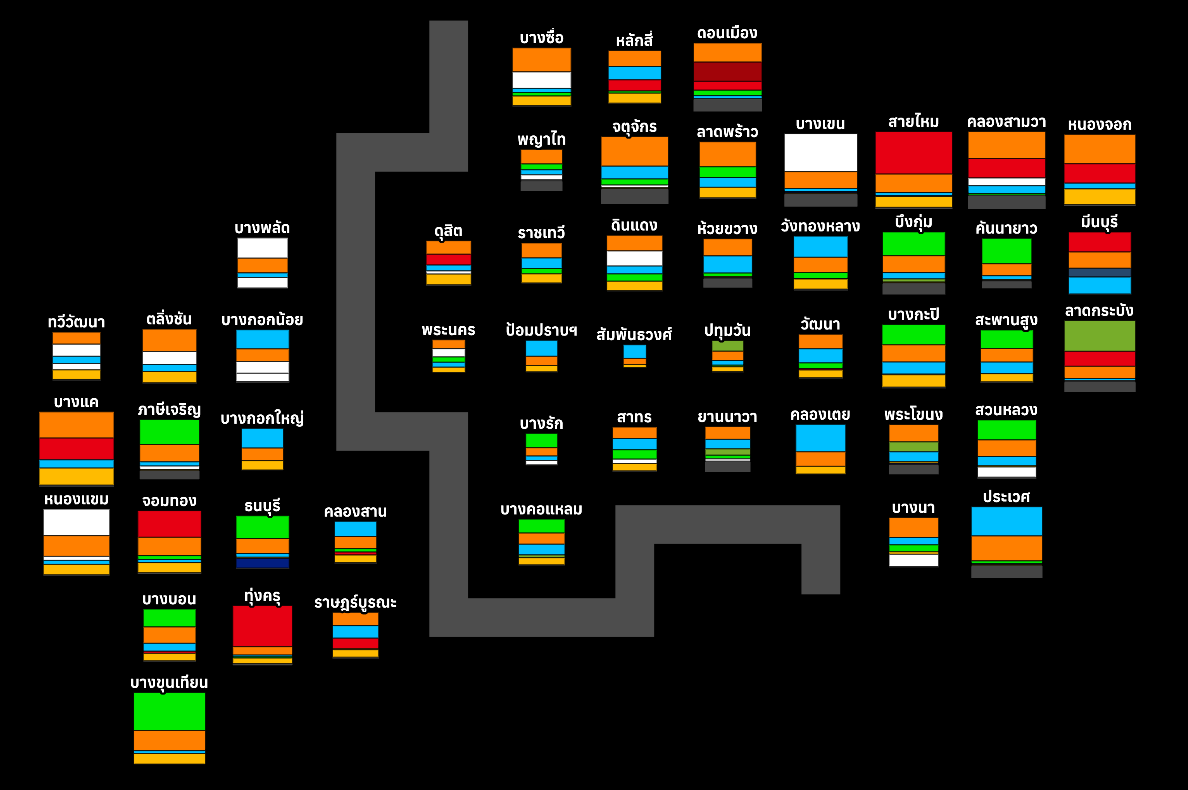
The bright spot for the PP came in the Bangkok Metropolitan Council (BMC)3 race, where the party at the time of writing is on track to win around 22 seats. (26 seats is needed for a majority on the 50-seat council). This is a modest improvement from 2022, when the party won 14 seats. The pro-Chadchat “Khon Tum Ngarn” (Working People) group won 11 seats, while another pro-Chadchat group, Better Bangkok, won 2 seats. (These groups are not officially endorsed by Chadchart — see here). Pheu Thai, which allowed candidates to run under the party name but did not otherwise provide much official support, was reduced from 20 seats in 2022 to just 4 seats. (This was to be expected; many of the party’s candidates had switched to the independent pro-Chadchart groups).
For Chadchart, who depends on the BMC as the city legislature to meet his budgetary needs, these results are a mixed bag. No party or group has a majority, so no one will have complete veto power over Chadchart’s agenda. At the same time, however, Chadchart will likely have to continue doing what he did in his first term: negotiating with groups of councillors who may or may not be totally friendly to the governor. Will the more-dominant PP play ball with the governor? Are the pro-Chadchart candidates truly loyal to Chadchart? These questions will be tested in the governor’s second term.
It’s worth noting that Chadchart’s decision not to officially endorse BMC candidates may have backfired. Given the scale of his victory, pro-Chadchart groups probably should have been able to put in a stronger performance than what we saw. In the end, it’s likely that many voters remained confused to the end about who the Working People group were affiliated with — which is perfectly understandable given the unusual ambiguity of the one-way endorsement.4
I’m hesitant to draw too many lessons from the BMC elections for national parties, because in the end the major story there is that it was a good night for incumbents. Of the 50 councillors elected, 32 were incumbents — even though 17 of them switched parties or group affiliations between 2022 and 2026. So in the end, Bangkokians put a premium on familiar councillors with a track record of local service delivery.
Yet if forced to extrapolate from these results, I will say this. The PP’s decent performance helps alleviate some of the sting of the poor performance in the governor’s race. Almost all of the new faces elected were from the PP, showing that they are still virtually the only party in Bangkok where the brand matters more than the candidate. The fact that many former Pheu Thai members won under other labels (like the Working People group or even as Democrats) is another data point that the party may have to write off Bangkok for the time being. The Democrats appear to be in a holding state; its recruitment of strong candidates from other parties in some districts have helped the party maintain its seat count from 2022, but there is no sign yet of a revival in the capital.
With the general election and the Bangkok local election coming in quick succession, Thai politics will now enter a less electorally dramatic period. In the coming weeks, we’ll now turn our attention here at The Coffee Parliament to more policy-focused matters.
Miscellaneous notes
The People’s Party also lost the Pattaya mayoral election to the incumbent Poramase Ngampichet. Poramase’s “We Love Pattaya” group swept the Pattaya council elections.
Chadchart barely put up any election posters during the campaign — perhaps an indication that you don’t need to in order to win. Perhaps a sign that campaigns can reduce roadside posters moving forward?
Color me skeptical, however, that Chadchart can retain his relatively apolitical image if he does choose to re-enter national politics.
The fact that the Democrats could not do better may show that Abhisit Vejjajiva’s team still has a serious problem trying to pull back conservatives still angry at him for his rejection of Prayut in 2019.
Their closing message to “take politics out of the BMC” also drew criticism from many People’s Party candidates, while the Democrats took aim at the question of whether these groups are truly “independent.”