

Happy new year! With only a little over a month to go before the election, it seems like few Thai politicians took a holiday, with campaigning happening in earnest throughout the past week. To keep up the pace, The Coffee Parliament will be jumping right back into our coverage of the election campaign.

The numbers don’t lie: a lot of people aren’t willing to tell pollsters who they’re thinking of voting for on February 8th. In NIDA’s regional polling and in their national polling, undecideds are often close to or even lead the most popular party. In their latest Bangkok poll, they found that 40 percent of people still haven’t chosen a party. Another provincial-level poll in Nakhon Ratchasima found 31 percent of voters undecided in their party choice.
This was not the case previously. In a NIDA poll from April 2023, conducted about a month before the May 2023 election (so a similar time frame as now), 2.75 percent of voters were undecided on their party of choice. Even a poll from June 2025 found only around 8 percent of voters were undecided. The evidence points to the high level of undecideds being a genuine phenomenon, not an artifact of a flawed polling method.
Anyone following Thai politics over the past two years will know, of course, that there are plenty of reasons for why voters might be more hesitant to cast a choice at the moment. The “grand compromises” that have characterized the past parliamentary term has eroded party brands, diminished voter trust in party leadership, and increased the general level of political cynicism. This is a marked contrast to 2019 and 2023, when parties and voters were much more clearly organized into the pro-Prayut Chan-o-cha and anti-Prayut camps.
If the polling is accurate, then anywhere between 30 to 40 percent of voters remain undecided. This means that with only a little over a month of campaigning left, it is still basically impossible to predict with any confidence what the result would be. Based on what we know so far, I think that Bhumjaithai is the early frontrunner. But any last minute swing by the undecideds at the last minute could change the picture of the election completely.
The two groups of undecided voters
There are basically two distinct groups of undecided voters, which we can divide into a few subgroups.
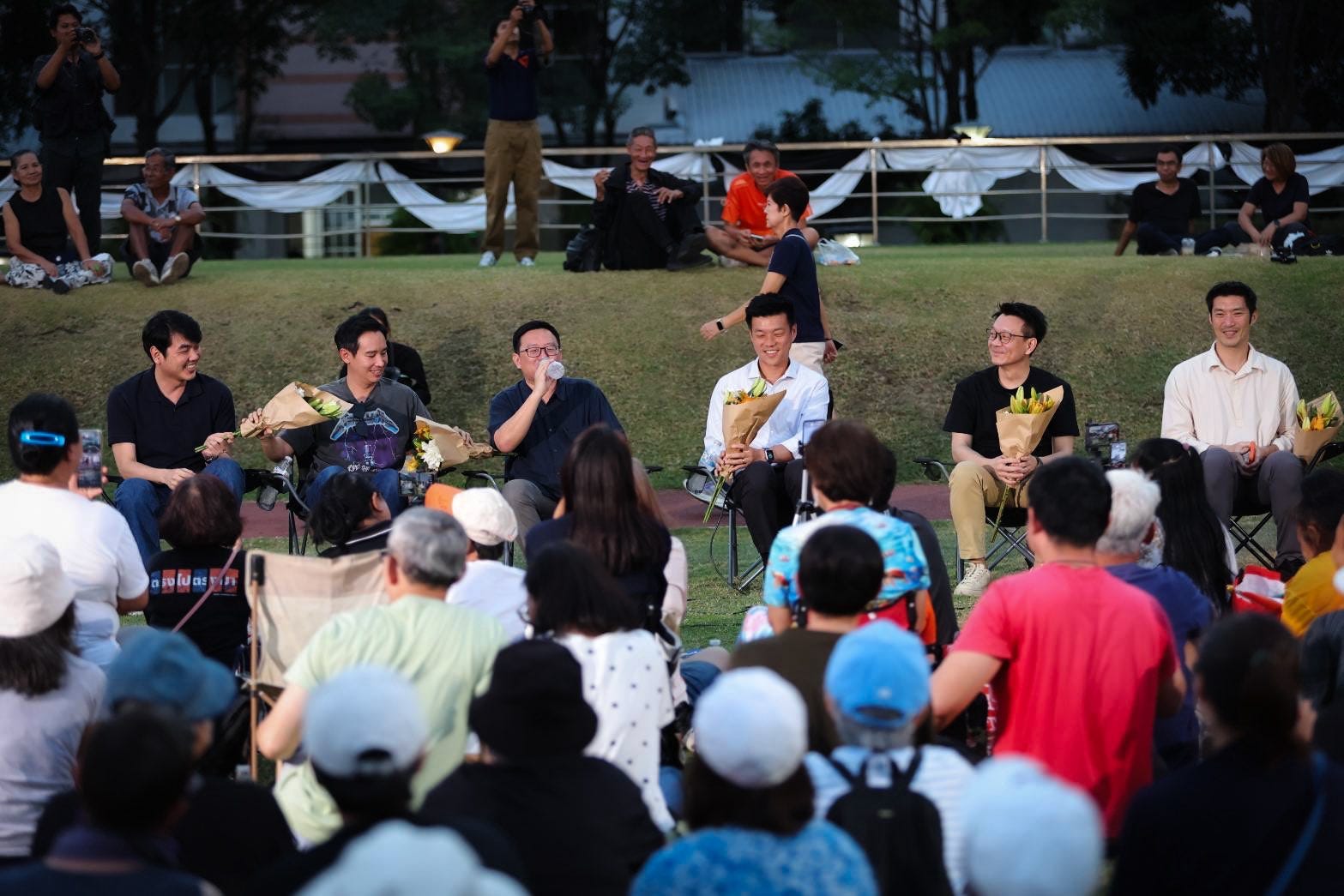
1. The disillusioned Pheu Thai/People’s Party voters. Supporters of both the People’s Party and Pheu Thai have reason to feel upset with their respective parties. There are what I call the “ideological” PP supporters, who began to withdraw support from the party over its support for Bhumjaithai and then a divorce that was easily predicted. We know that PP polling began slumping immediately after Anutin Charnvirakul was elected prime minister and has never recovered since. The PP is aware that this gambit backfired, going as far as to hold an apology picnic. Then there are a group of “softer” former PP supporters who have not been attracted to the party since the MFP was dissolved, perhaps finding PP leader Natthaphong Rueangpanyawut less attractive compared to Pita Limjaroenrat.
We also have former Pheu Thai voters who have abandoned the party for a variety of reasons: its original alliance with conservative parties, its lackluster two years in office, or the Paetongtarn voice call leak. For whatever reason, some of these voters have not settled on the PP either. Together, these disillusioned PP/Pheu Thai former fans likely make up most of the undecided voters.
Unfortunately for these voters, there aren’t a lot of alternative choices. Sudarat Keyuraphan’s Thai Sang Thai Party may pick up some votes, but they won only six seats in 2023. Any other option would be even smaller. The danger for the People’s Party or for Pheu Thai, therefore, is that instead of picking between two choices they feel lukewarm about, these undecided voters stay home. That could spell disaster for both parties, because at the levels where they are currently polling, they would likely be on track to lose rather than gain seats.
2. The “spoiled for choice” conservative voters. Conservative voters face a different dilemma. They have a lot of choice at this election, particularly a Bhumjaithai on the rise and a rejuvenated Democrat Party. There are also other smaller choices, like the United Thai Nation Party or even the Economic Party. This group likely makes up a smaller portion of the undecided voters. (My best guess right now is that in the end most of this segment will vote for Bhumjaithai, like they ended up consolidating behind Palang Pracharath in 2019).
The difference between this group and, say, the angry PP supporter, is that they are less likely to stay home. They didn’t particularly like the Pheu Thai government and would prefer if a more “trusted” choice is set to lead the government, and they don’t want the orange camp anywhere near power either. So the question is more which choice they like most. To put it simply: this group of voters aren’t disillusioned, they’re spoiled for choice and they’re taking time to weigh their options.
What this means for the election
If this analysis is correct, then the biggest challenge facing the PP and Pheu Thai is not persuasion but motivation. For the PP, the task is not only winning over new voters but to make sure that the 2023 electorate that powered the MFP to victory actually shows up. I think that this is part of why the PP is so keen to frame the election as a binary choice. When Anutin said that he would not partner with the PP if it continues to support amendment of the lèse-majesté law, Natthaphong immediately posted that “I would like to repeat that this election is a competition in government formation between a People’s Party government and a Bhumjaithai government.” For his part, Anutin seems much less keen on these binary choices — knowing, perhaps, that the conservative bloc is prepared to turn out for him anyway. Within a few days of his rejection of the PP, after learning that Natthaphong was not pledging to amend the lèse-majesté law, Anutin refused to say that he would not partner with the PP if this law was no longer in their proposals.
The other challenge the PP has is they need to stop swing voters from defecting to other parties. I’ll highlight one group. Some of their undecided former supporters may be pulled in an unexpected direction: the Democrats. It is a long-running hypothesis of some Democrat politicians that since 2019 they have lost a significant number of voters to the successive orange parties. The clearest evidence comes in the form of taxpayer donations to political parties1. The Democrats used to top these donations, but in recent years it has been the MFP and the PP that receives the most donations. It is unlikely that all of these are new taxpayers. It is worth wondering, therefore, if these particular segment of swing voters may now consider “going home” to the Democrats now that the party has refreshed leadership.
Pheu Thai does seem to be pursuing a strategy of consolidating its pro-Thaksin base. Its use of Yodchanan Wongsawat — Thaksin Shinawatra’s nephew with relatively scant political experience — as the face of the campaign demonstrates that the party is going all-in on retaining voters with pro-Shinawatra sympathies. So far, however, I suspect that the party is not seriously trying to pursue new voters. In Bangkok, it has plastered its signs with its 20 baht transit policy, a proposal first debuted back in 2011 and unsuccessfully pursued in its last stint in government. I don’t know if there are many voters left to be freshly convinced by this proposal. Pheu Thai also appears to be willing to forsake the anti-establishment terrain this time, declining repeatedly to name any party they would be unwilling to form a coalition with. It is an honest approach, but one that denies the party the ability to take advantage of the PP’s recent stumbles.
The main takeaway is that no party can entirely be counted out while the number of undecideds remains so high. Instead, it makes this election particularly volatile. In 2023, a national environment that did not change dramatically during the campaign still yielded a surprise last-minute swing that put the MFP on top. This time, unless the undecideds refuse to show up en masse, there is even more room for things to change.
Taxpayers in Thailand can allocate up to 500 baht of their taxes as a donation to a political party of their choice.
It sounds as if a sharp drop in turnout would not surprise you.